
Avicenna's Metaphysics
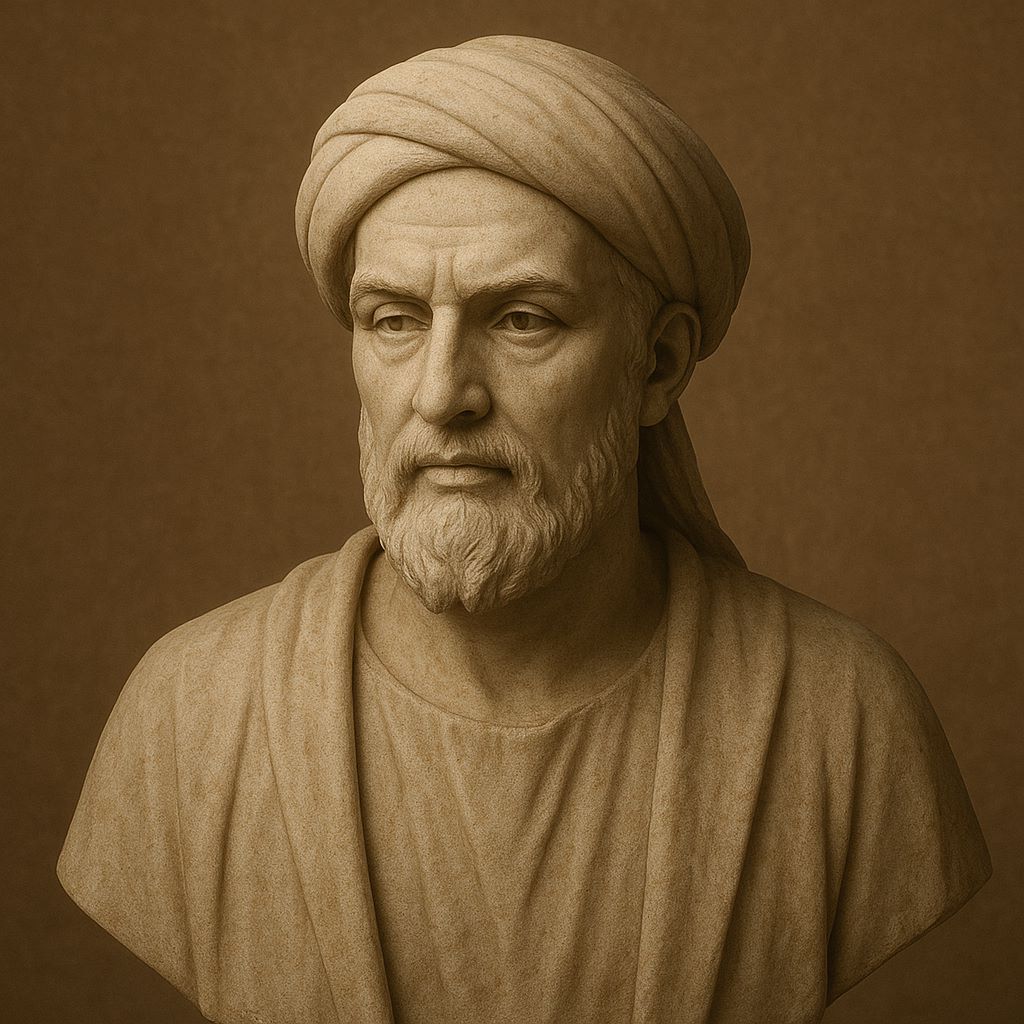
This course, taught by Dr. Jari Kaukua, explores Avicenna’s metaphysics, focusing on key topics such as essence and existence, the Principle of Sufficient Reason, modal logic, the Necessary Existent, God’s knowledge of particulars, and the problem of future contingency. With readings from Avicenna, contemporary scholars, and Dr. Kaukua’s own research, this course provides a deep dive into medieval philosophy, bridging classical thought with modern essentialism. Ideal for those interested in philosophy, theology, and metaphysics.
Course Timings
Wednesdays, 13:00 UTC
Register by
September 29, 2026
Start Date
September 30
Course Fee
100 €
Curriculum
Avicenna’s Metaphysics
1.Essence and existence, PSR
Readings:
Selected texts from Avicenna.
Richardson, Kara. ‘Avicenna and the Principle of Sufficient Reason’. The Review of Metaphysics 67/4 (2014): 743–768.
Benevich, Fedor. ‘Avicenna’s Essentialism’. British Journal for the History of Philosophy 30/3 (2022): 410–433.
2.Modalities
Readings:
Selected texts from Avicenna.
Kaukua, Jari. ‘Modal Logic and Modal Metaphysics: An Avicennian Division of Labour’. Theoria, forthcoming.
Kaukua, Jari. ’Conceivability and Metaphysical Possibility in Avicenna’. Oxford Studies in Medieval Philosophy, forthcoming.
3.Proof for the Necessary Existent, its unicity, and its simplicity
Readings:
Selected texts from Avicenna.
Zarepour, Mohammad Saleh. Necessary Existence and Monotheism. CUP 2022. (Parts.)
4.Corollaries of the proof: eternity and unicity of the world
Readings:
Selected texts from Avicenna.
5.God’s knowledge of particulars through complete causes
Readings:
Selected texts from Avicenna.
Marmura, Michael E. ‘Some Aspects of Avicenna’s Theory of God’s Knowledge of Particulars’. Journal of the American Oriental Society 82/3 (1962): 299–312.
Kaukua, Jari. ‘Future Contingency and God’s Knowledge of Particulars in Avicenna’. British Journal for the History of Philosophy 32/4 (2024): 745–765.
6.Consequences of God’s knowledge of particulars through complete causes: necessitarianism, A-theory of time
Readings:
Selected texts from Avicenna.
Benevich, Fedor. ‘God’s Knowledge of Particulars: Avicenna, kalām, and the Post-Avicennian Synthesis’. Recherches de théologie et philosophie médiévales 86/1 (2019): 1–47.
7. Epistemic openness in logic and natural philosophy (future contingency, chance, probability)
Readings:
Selected texts from Avicenna.
Belo, Catarina. Chance and Determinism in Avicenna and Averroes. Brill, 2007. (Parts.)
Zarepour, Mohammad Saleh. ‘Ibn Sīnā on Future Contingency’. The Monist 108/3 (2025): 213–228.
8.Freedom of the will: Avicenna’s compatibilism
Readings:
Selected texts from Avicenna.
Kaukua, Jari. ‘Freedom and Responsibility in Avicenna’. In Daniel De Smet and Meryem Sebti (eds), Penser avec Avicenne: De l’héritage grec à la réception latine, en homage à Jules Janssens, Recherches de théologie et philosophie médiévales – Bibliotheca 20 (Peeters, 2022): 149–168.
9.Problems from the twelfth century: regress of existence, ungrounded ontological multiplicity
Readings:
Selected texts from Khayyām, Suhrawardī.
Wisnovsky, Robert. ‘Essence and Existence in the Eleventh- and Twelfth-Century Islamic East (mašriq): A Sketch’. In Dag Nikolaus Hasse and Amos Bertolacci (eds), The Arabic, Hebrew and Latin Reception of Avicenna’s Metaphysics (De Gruyter, 2012): 27–50.
10.Avicenna and contemporary essentialism?
Readings:
Fine, Kit. ‘Essence and Modality’. Philosophical Perspectives 8 (1994): 1–16.
Lowe, E. J. ‘What Is the Source of Our Knowledge of Modal Truths?’ Mind 121/484 (2012): 919–950.
Primary Target Audience
This course is designed for intellectually curious learners and interested laypersons who have some prior familiarity with philosophical reasoning. While the readings are not introductory, the course does not require expert-level knowledge. It is ideal for participants who are eager to engage with moderately advanced texts and explore philosophical arguments in a structured and accessible way.
Target group
This course is open to a wide and diverse audience, including:
🎓 Academics & Researchers
📘 University & Graduate Students
📘 interested laypersons
General info
Subject: Avicenna’s Metaphysics
Language of instruction: English
Length: 10 sessions
Contact hours: 10
Session Timing
UTC: 01:00 pm
London: 2:00 pm
New York: 9:00 am
Germany: 3:00 pm
Please check your local time, as daylight-saving changes may apply.
Lecturer

Dr. Jari Kaukua
Dr. Jari Kaukua is a professor at the Department of Social Sciences and Philosophy, University of Jyväskylä, specializing in medieval philosophy, particularly the Arabic philosophical and theological tradition. His research focuses on epistemology, metaphysics, and philosophy of mind, with a particular interest in Avicenna. Dr. Kaukua has published extensively on modal logic, metaphysical possibility, and God’s knowledge in medieval thought. He is recognized for bridging classical Islamic philosophy with contemporary philosophical discourse.
Don't miss this unique opportunity to learn from a leading scholar in the field.
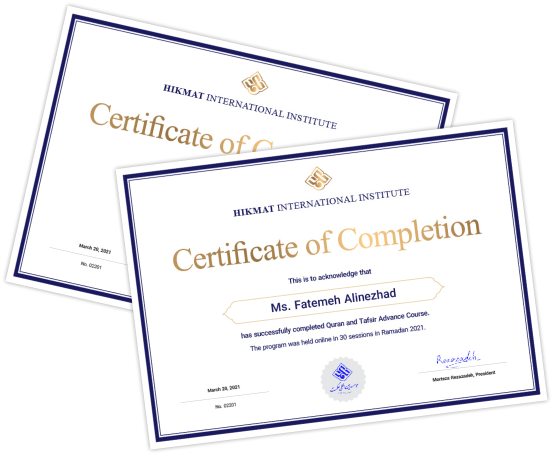
Certificate of Completion
For any questions, email us at info@hikmat-ins.com or message us on WhatsApp at +1 (778) 886 9819.
Frequently Asked Questions (FAQ)
What is the weekly course?
A Weekly Live Course is a general educational program open to anyone interested in the subject. Each course includes one live online session per week and runs throughout an academic term.
When does the course take place?
The course will run from September 30, 2026.
How long is the course and each session?
The course consists of 10 weekly sessions, and each session lasts 60 to 75 minutes, depending on the instructor’s plan.
Will the lectures be recorded and available for viewing after the live sessions?
Yes, all sessions are recorded and will be made available for viewing after they take place.
What is the cost of the course?
The course fee is 100 Euro.
How can I contact you if I have further questions?
You can email us at info@hikmat-ins.com.
Is installment payment available?
Yes. If you would like to pay the course fee in installments, please contact us to discuss the available options.